South Africa is one of the great whale watching countries on Earth. From June to early December, Southern Right Whales migrate north from their Antarctic feeding grounds to calve, nurse and mate in the sheltered bays of the Western and Eastern Cape. Add resident Bryde's Whales, migrating Humpback Whales, Orca, common and bottlenose dolphins, the rare Indo-Pacific humpback dolphin, Cape fur seals, African penguins and seabirds in their thousands, and you have a coastline that rivals — and frequently surpasses — Patagonia, Baja California and the Hervey Bay in sheer marine wildlife density.
This pillar guide covers every meaningful whale watching destination in South Africa, the species you can expect to see, the best months to travel, the difference between land-based and boat-based whale watching, what trips cost, and the questions visitors ask most often. Whether you're flying in from Europe for a once-in-a-lifetime trip or driving the Garden Route from Cape Town, the goal is to help you choose the right destination, the right month, and the right kind of trip — and to get on the water with the right operator. Send us your dates via the enquiry form at any time and we'll come back via WhatsApp or email within hours.
Why South Africa is one of the world's best whale watching destinations
Three things make South Africa exceptional. First, geography: the cold, nutrient-rich Benguela current sweeps up the west coast and meets the warm Agulhas current at Cape Agulhas, creating an enormously productive marine ecosystem. The continental shelf drops steeply close to shore, bringing pelagic species — including whales — within easy reach of the coast. Second, behaviour: South Africa's bays (Walker Bay, Walker Bay's Romansbaai, False Bay, Mossel Bay, Plettenberg Bay) provide the calm, shallow water that Southern Right Whale cows need to give birth and raise calves. Third, density: an estimated 6,000-strong South African Southern Right population concentrates on this short stretch of coast every spring, with peak densities in Walker Bay so high that calves are routinely sighted from coffee shops.
Hermanus has been the headline whale watching destination of the southern hemisphere for over thirty years. It hosts the world's only Whale Crier (a town crier who walks the Cliff Path blowing a kelp horn whenever whales appear), and the annual Hermanus Whale Festival in the last week of September is the country's largest eco-marine festival. But the country's wider coastline is just as rewarding — and far less crowded — which is why this guide treats every major destination on its own terms.
Hermanus whale watching
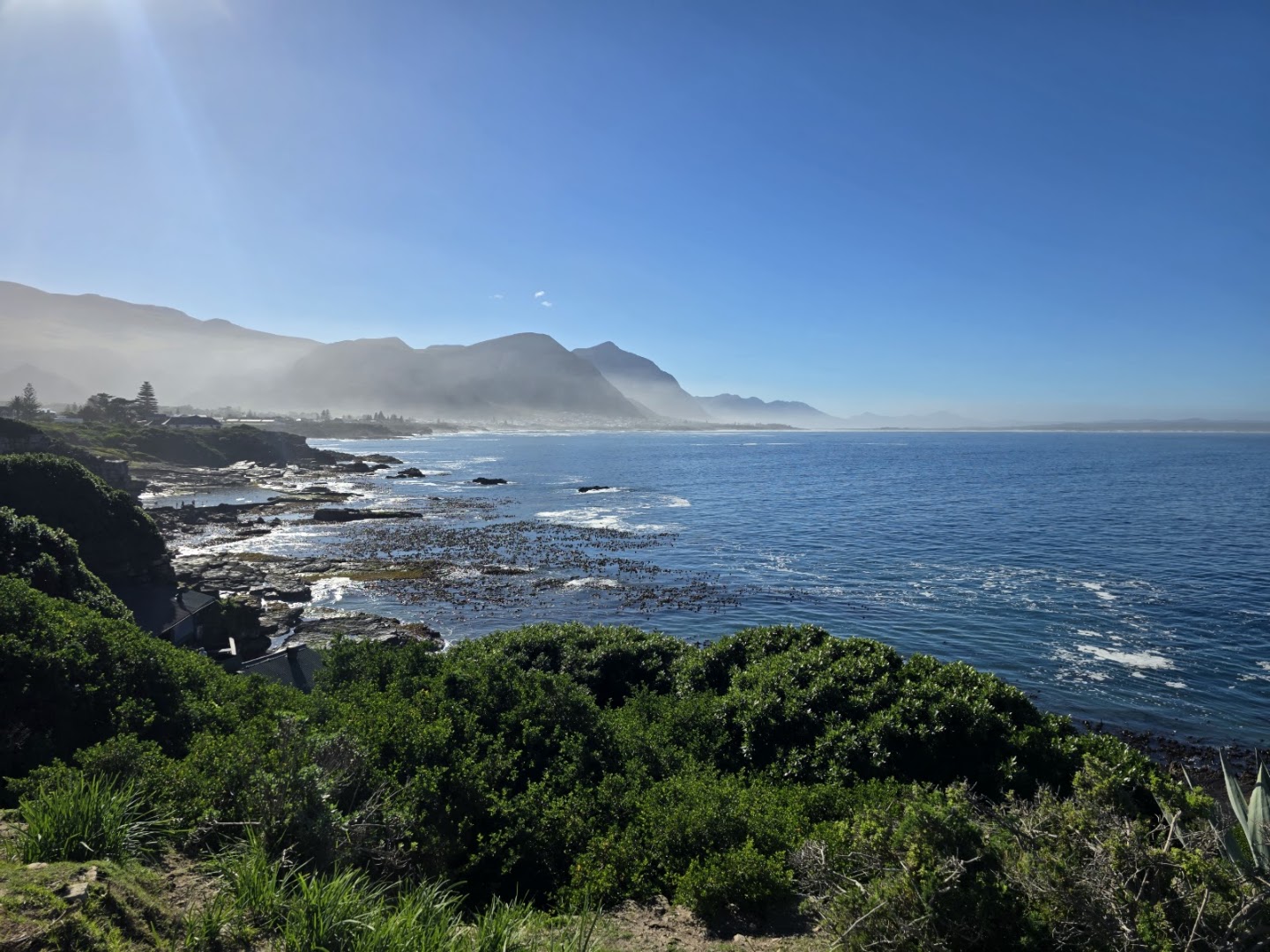
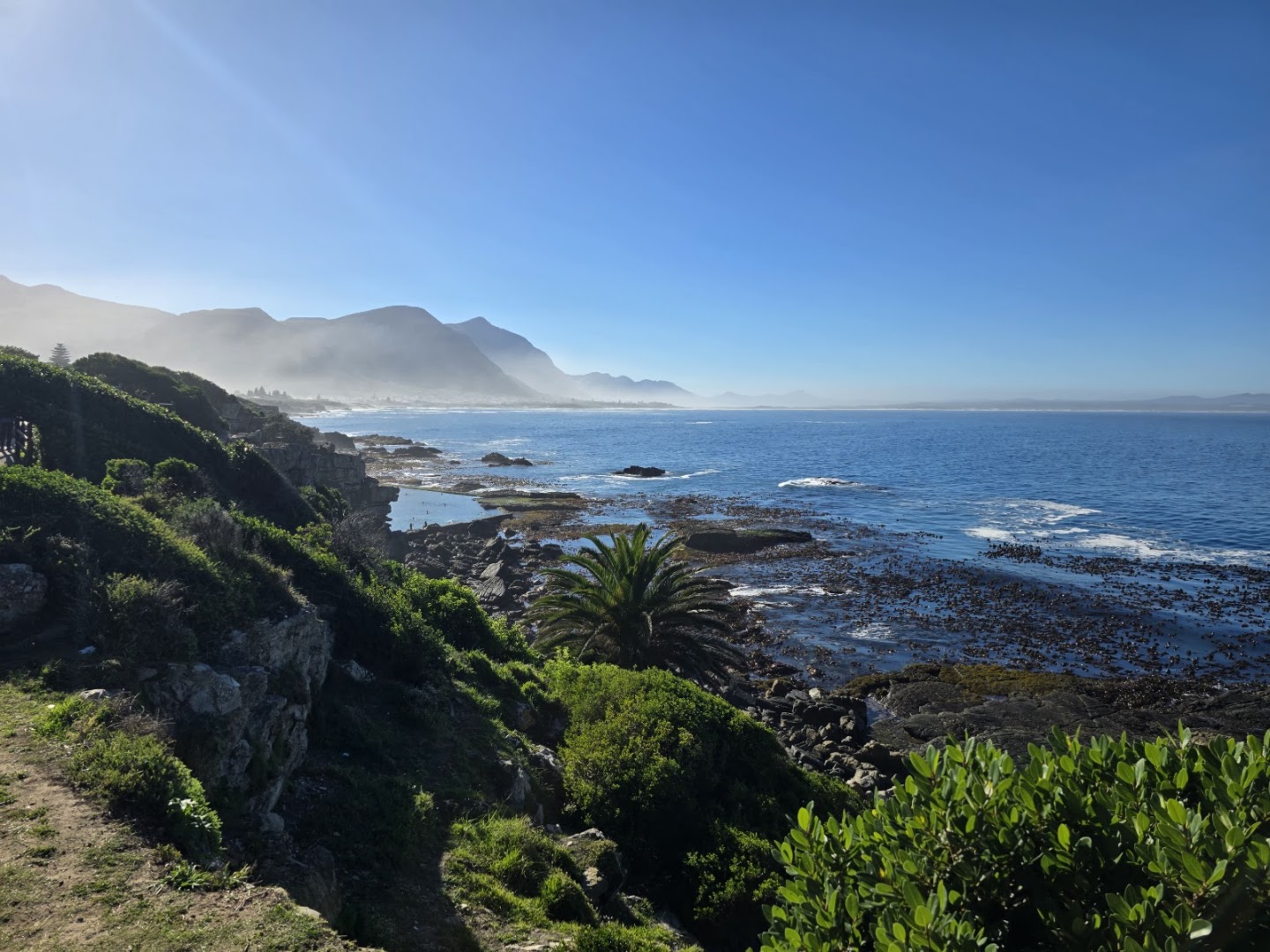
Hermanus, a two-hour drive east of Cape Town along the R44 coastal road, is the global benchmark for shore-based whale watching. The town sits on the cliffs above Walker Bay — a wide, calm bay that functions as the most reliable Southern Right Whale nursery in the world. Between June and December, mothers with newborn calves rest within 100 metres of the shoreline, often so close that you can hear their blows from your cafe table.
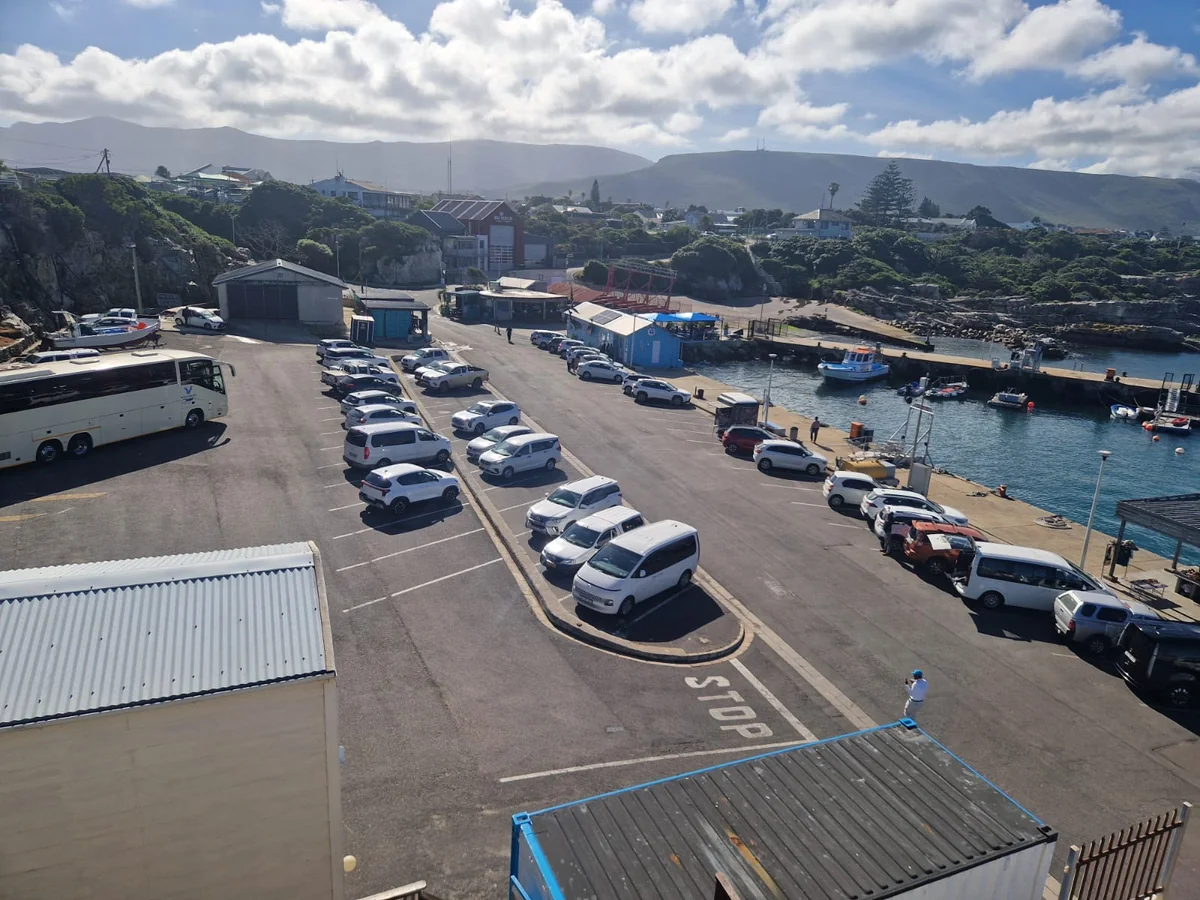
The 12-kilometre Hermanus Cliff Path runs the length of the town from the Old Harbour to Grotto Beach, providing the world's best free whale watching. For on-the-water encounters, permitted boat-based whale watching tours depart from the New Harbour several times a day during the season — typically 09:00, 12:00 and 15:00, with an early 07:00 departure added in summer when conditions are calm. Trips run 1.5 to 2 hours, and only the boats with whale watching permits may legally approach whales closer than 300 metres.
Full destination guide: Whale Watching Hermanus. See also Walker Bay Whale Guide, prices, walking tour and scenic flights.
Gansbaai whale watching
Gansbaai sits 40 minutes east of Hermanus on the far side of the Klein River mountains. It is the home of the South African "Marine Big 5" — whales, sharks, Cape fur seals, dolphins and African penguins — and the world capital of cage diving with great white sharks. Gansbaai's whale watching trips run wider and longer than Hermanus, operating around Dyer Island and Geyser Rock where roughly 60,000 Cape fur seals breed and great white sharks have historically patrolled "Shark Alley".
Choose Gansbaai if you want a longer, more wildlife-dense boat experience and don't mind a bigger swell. Boats are larger and faster than Hermanus tenders, and trips typically run 2 to 3 hours. The destination also offers excellent land-based whale watching from the cliffs at De Kelders, which face a calving nursery comparable to Walker Bay. Full guide: Whale Watching Gansbaai, Marine Big 5 Sea Safari and Gansbaai vs Hermanus.
Plettenberg Bay whale watching
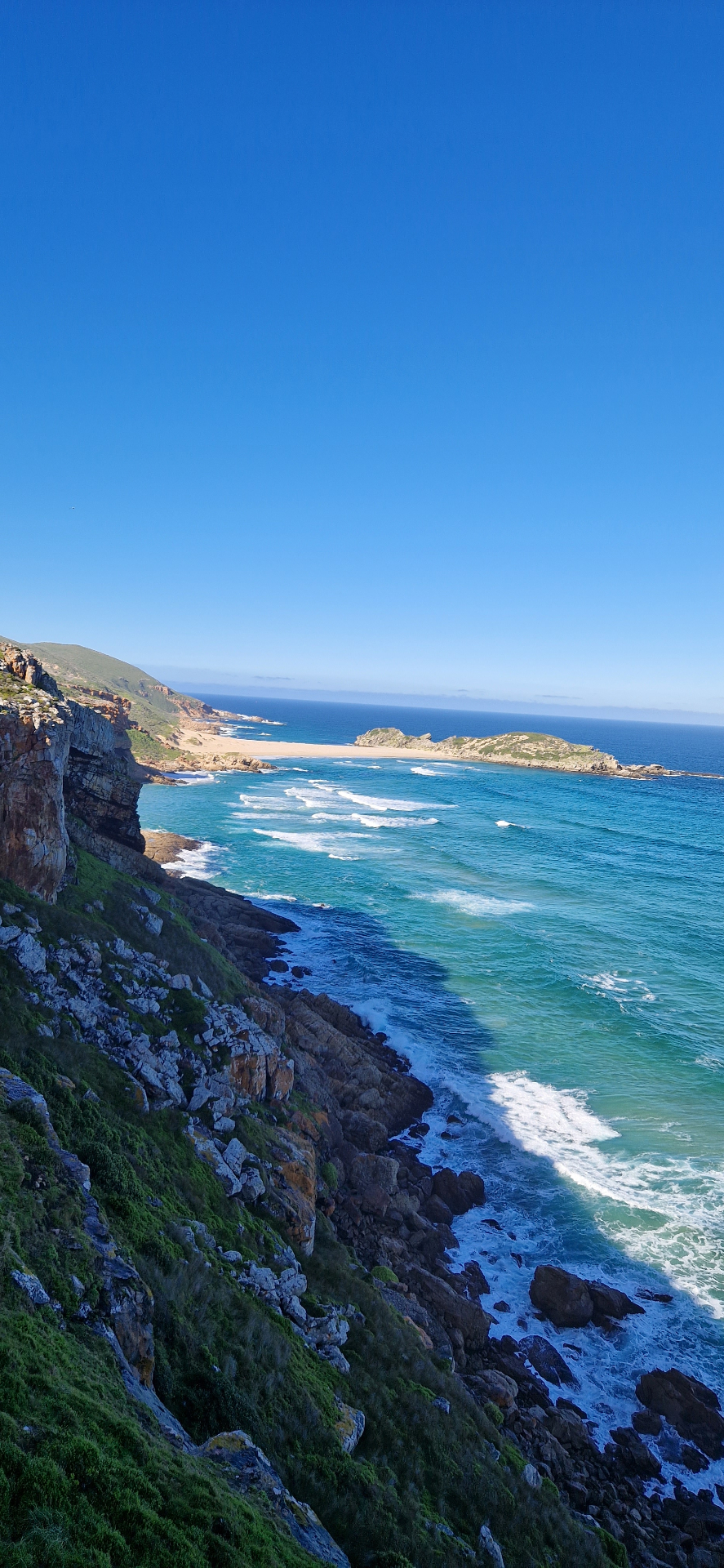
Plettenberg Bay — known locally as "Plett" — is the diversity champion of South African whale watching. The bay is sheltered between the Robberg Peninsula and the Tsitsikamma mountains and hosts Southern Right Whales (June–December), migrating Humpback Whales (June–November, November–January return), resident Bryde's Whales year-round, resident bottlenose dolphins (around 600 individuals), common dolphins in pods of hundreds, and the rare Indo-Pacific humpback dolphin — one of the most sought-after marine mammal sightings on the African continent.
Trips depart from Central Beach in 12-seater semi-rigid inflatables. The dramatic Robberg Peninsula is a UNESCO World Heritage Site and provides outstanding land-based whale, dolphin and seal viewing. See: Whale Watching Plettenberg Bay and Plett Dolphin Watching.
Cape Town whale watching
Cape Town is the natural starting point for international visitors. The city's False Bay coastline — from Muizenberg around to Simon's Town — hosts Southern Right Whales in winter and spring, often visible from Boyes Drive and the False Bay railway line. Boat-based whale watching trips run out of Simon's Town and Hout Bay, often combined with visits to the Cape fur seal colony at Duiker Island and the African penguin colony at Boulders Beach.
For visitors with limited time in Cape Town, the easiest way to combine a city stay with peak Walker Bay sightings is a guided day trip to Hermanus. See: Whale Watching Cape Town and Day Tour from Cape Town.
Mossel Bay and Knysna — Garden Route whale watching
Mossel Bay is the western gateway to the Garden Route and a quietly excellent whale watching destination. Southern Right Whales, Bryde's Whales and Humpback Whales all pass close to shore, and Seal Island in the bay is home to a large Cape fur seal colony. The bay's sheltered geography means trips frequently run when neighbouring coasts are wind-bound. See: Whale Watching Mossel Bay.
Knysna is best known for the Knysna Heads — two sandstone cliffs framing the entrance to the lagoon — but the open ocean beyond is genuinely excellent whale watching water. Trips depart from Thesen Island and are easily combined with a Featherbed Reserve cruise or a Robberg Peninsula hike. See: Whale Watching Knysna.
Best months for whale watching in South Africa
The full whale watching season in South Africa runs from June to early December, but each month feels different.
- June: first arrivals. Cows heavily pregnant. Sightings rapidly increasing.
- July: calving begins. Newborns observed in Walker Bay and De Hoop. Crowds light.
- August: numbers build dramatically. Cow-calf pairs rest close to shore. Weather still wintry.
- September: peak. The Hermanus Whale Festival is in the last week. Boats book out far ahead.
- October: co-peak with September. Calmer spring weather makes boat trips highly reliable.
- November: the southward return migration begins. Final great Hermanus sightings.
- Early December: last stragglers depart for the Antarctic. Tour numbers wind down.
For a different spectacle, our seasonal Yzerfontein Humpback Whale Expedition sails the Cape West Coast from November to March in search of Humpback Whale super groups — vast feeding aggregations rarely observed anywhere else on Earth.
Southern Right Whale migration
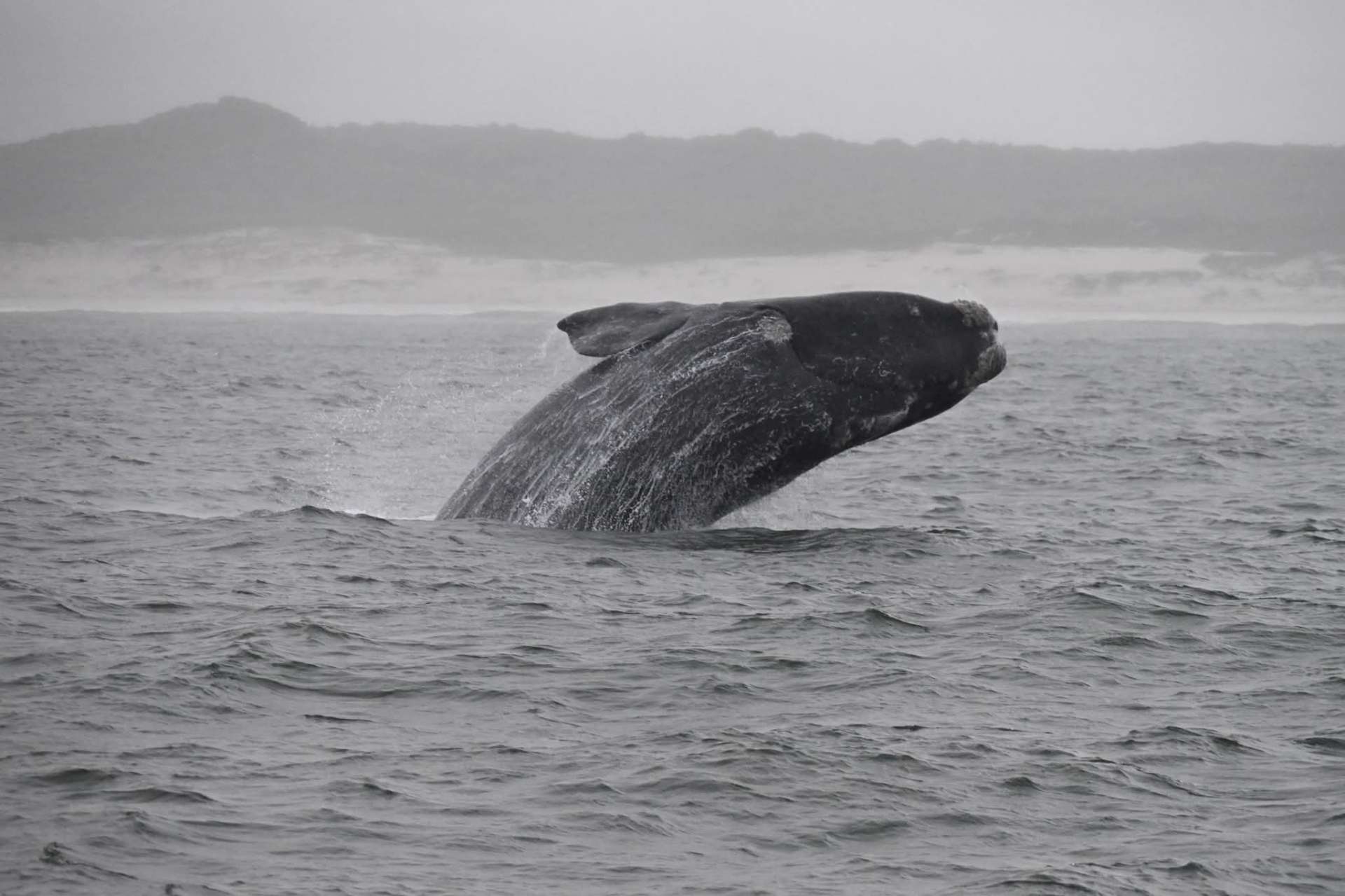
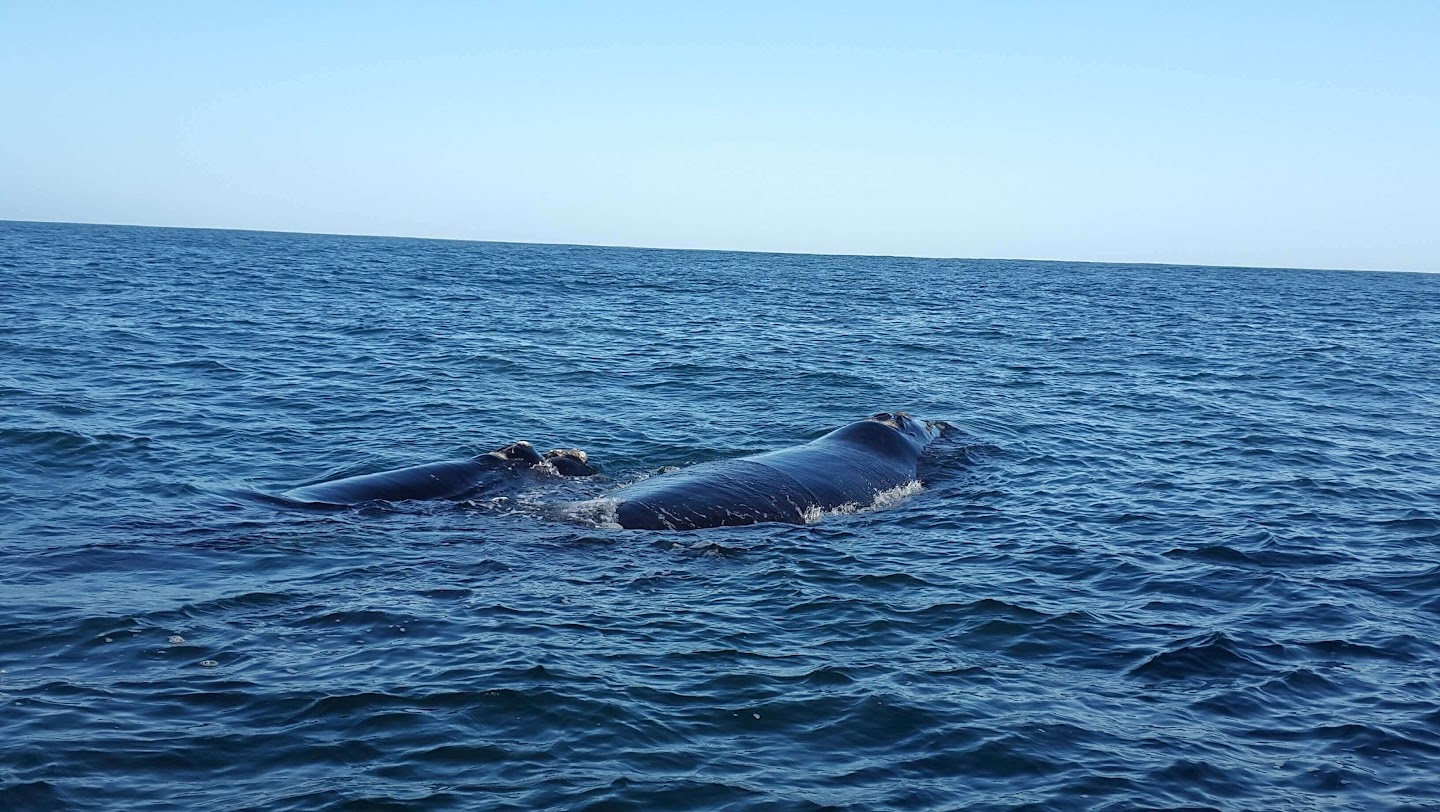
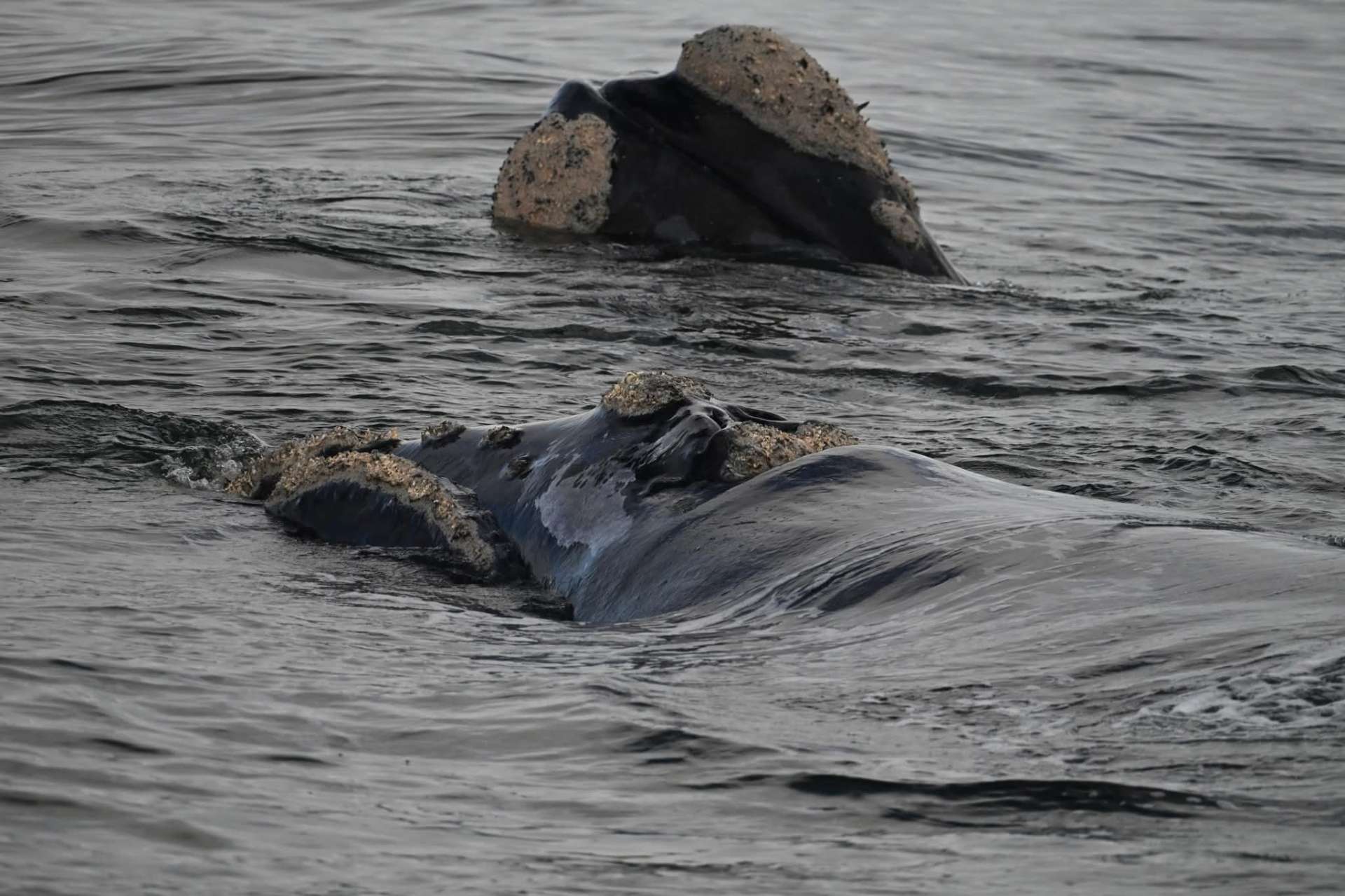
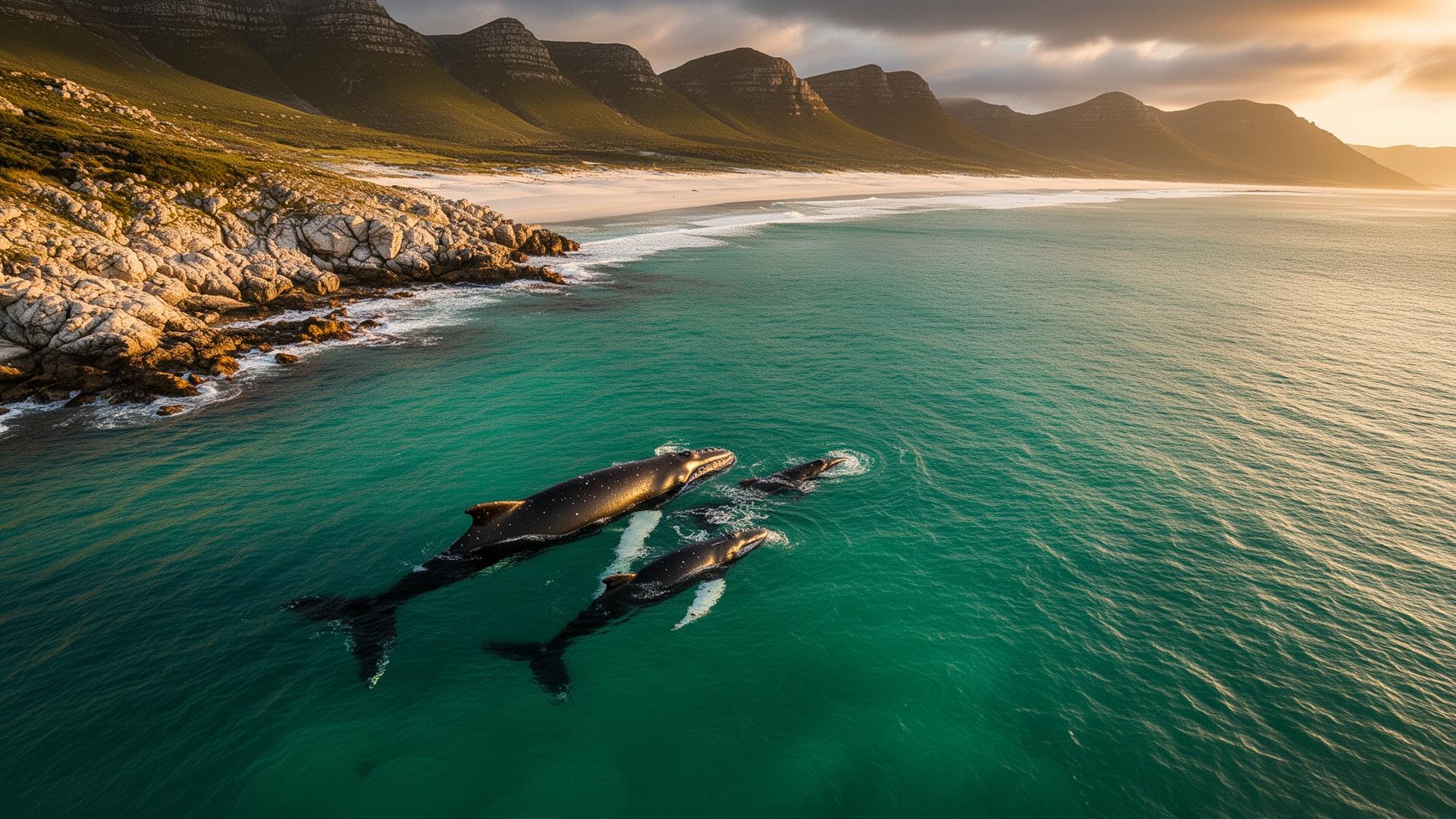
The Southern Right Whale (Eubalaena australis) is South Africa's headline species and the reason Hermanus exists as a global whale watching destination. Adults reach 13–18 metres long and weigh up to 80 tonnes — the weight of roughly twelve African elephants. They have stocky black bodies, no dorsal fin (a key identification feature), broad pectoral flippers and a wide V-shaped blow. The distinctive white callosity patches on their heads are colonised by whale lice; the pattern is unique to each individual and researchers use it as a fingerprint to track returning whales year after year.
Southern Rights spend summer (December–April) feeding on copepods and krill in the Antarctic, then migrate north each winter to calve and nurse. Pregnant females arrive first, hauling out into shallow sheltered bays to give birth. Calves are 5–6 metres at birth and gain roughly 50 kilograms per day on milk that is around 40% fat. By December the whole population departs south again. The species was hunted to near extinction by 1935 and the South African population has recovered to around 6,000 animals, growing by approximately 7% per year. Full species guide: Southern Right Whales in South Africa.
Humpback Whales in South Africa
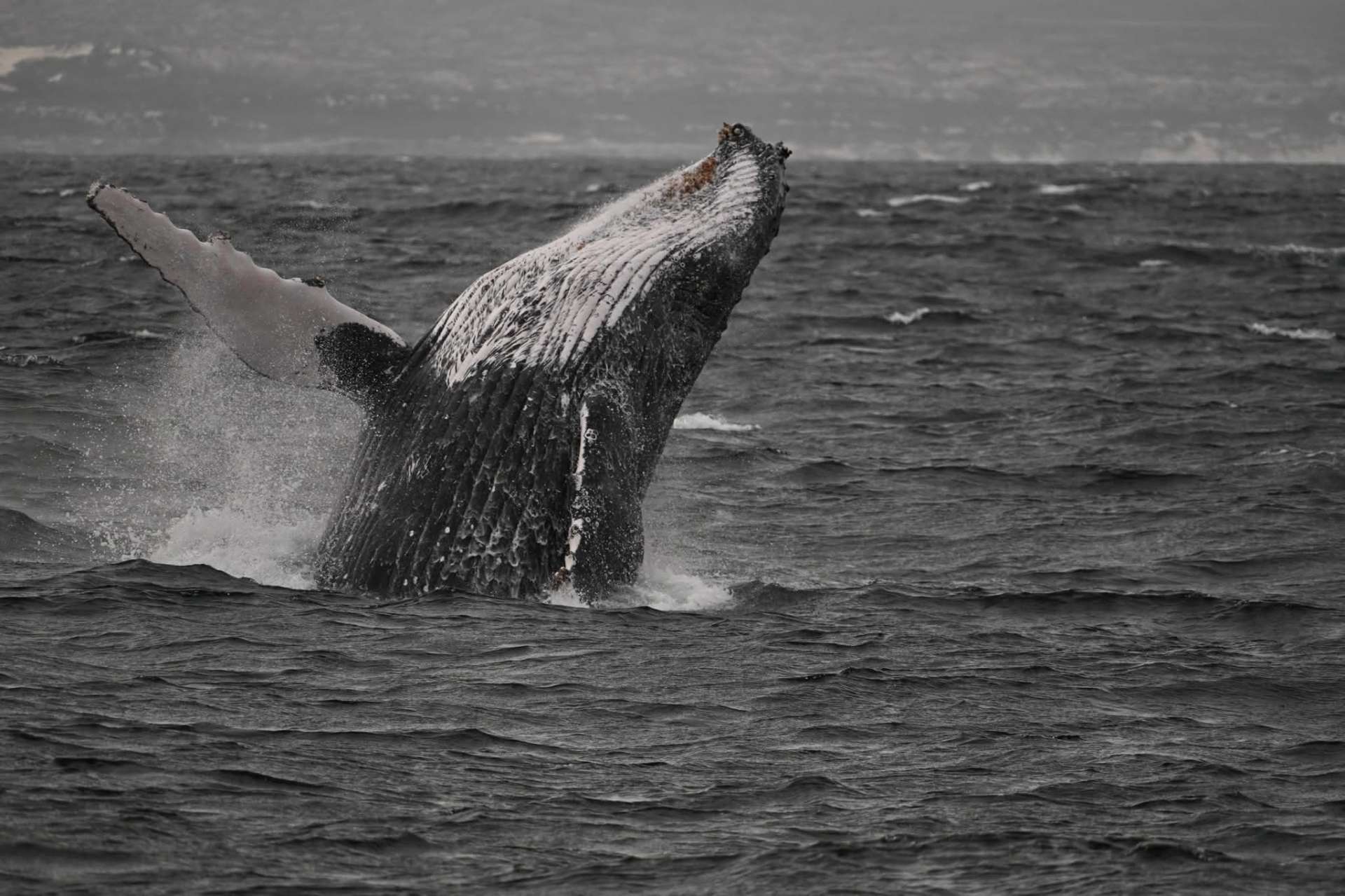
Humpback Whales (Megaptera novaeangliae) pass the South African coast on the longest mammal migration on Earth — up to 8,000 kilometres each way between Antarctic feeding grounds and tropical breeding grounds off Mozambique and Madagascar. Two main pulses cross our waters: the northbound migration from June to November and the southbound return from November to January. Humpbacks are unmistakable, with knobbly heads, enormously long pectoral fins (up to a third of their body length), strong breaches and complex songs sung only by males on the breeding grounds.
The most extraordinary Humpback phenomenon in South Africa is the Cape West Coast "super group" feeding aggregations — between 20 and 200 Humpback Whales lunge-feeding together on krill, an entirely new behaviour first described scientifically in 2017. These are the target of our seasonal Yzerfontein Humpback Whale Expedition.
Bryde's Whales
Bryde's Whales (Balaenoptera brydei) — pronounced "broo-duhs" — are South Africa's only resident baleen whale. They grow to about 14 metres and have a slim, streamlined body with three parallel ridges on top of the head (a useful field mark distinguishing them from other rorquals). Bryde's are present in South African waters year-round and are most regularly sighted off Plettenberg Bay, Mossel Bay and the Cape coast. They are surface lunge-feeders, often associated with bait balls of sardines and anchovies — and during the Sardine Run from May to July they put on extraordinary feeding displays alongside Cape gannets and common dolphins.
Land-based vs boat-based whale watching
South Africa is unusual in offering world-class examples of both. The two are complementary, not competitive, and most visitors who have time should do both.
Land-based whale watching is free, slow, unhurried and unaffected by sea conditions. The Hermanus Cliff Path is the global gold standard, with elevated viewpoints between five and twenty metres above the water and whales frequently within 50–100 metres of the rocks. De Kelders in Gansbaai is equally good. The Robberg Peninsula in Plettenberg Bay, Boyes Drive in False Bay and Pinnacle Point in Mossel Bay are also excellent. Bring binoculars, a hot drink, layered clothing and patience. Read more: Land-Based Whale Watching in Hermanus.
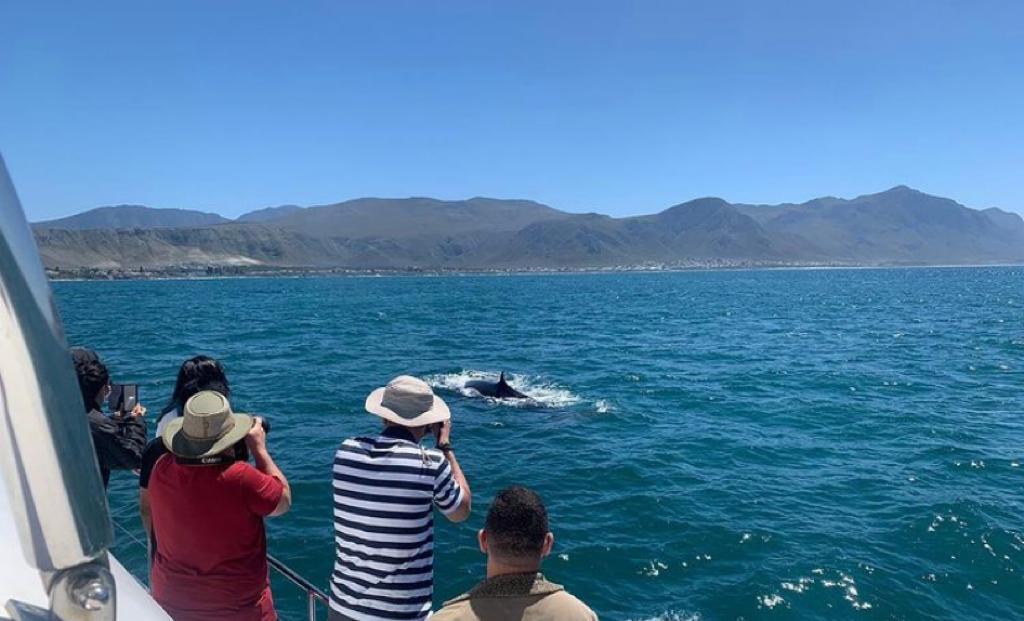
Boat-based whale watching brings you to within the legal 50-metre approach distance, and whales frequently choose to approach the boat themselves — at which point the skipper must idle and let them pass. This is when you experience the sheer scale of a 60-tonne animal at close range, hear the explosive blow and smell the breath (it is famously not pleasant). Only permitted operators may approach whales; trips run from Hermanus, Gansbaai, Plettenberg Bay, Mossel Bay, Knysna, Simon's Town and Hout Bay.
A third option is scenic whale watching flights — a bird's-eye view of whales, dolphins and the Walker Bay coastline from a low-flying aircraft. Compare formats: Whale Watching vs Whale Watching Flights.
Whale watching costs in South Africa
Pricing varies by destination, boat size and trip duration. Our current published rates and indicative ranges (2026 season):
- Hermanus boat-based: Adults R1,500; Pensioners/Students R1,400; Children under 12 R750; Children under 3 free. Full pricing.
- Gansbaai Marine Big 5: approximately R1,700–R2,200 per adult depending on operator and season.
- Cape Town & False Bay: approximately R1,200–R1,700 per adult.
- Plettenberg Bay boat-based: approximately R1,200–R1,700 per adult.
- Mossel Bay and Knysna: approximately R1,100–R1,500 per adult.
- Scenic whale watching flights (Hermanus): quoted on request based on aircraft and passenger numbers.
- Land-based whale watching: free everywhere along the South African coast.
Compare destination pricing: Whale Watching Prices.
How to plan your South African whale watching trip
A classic ten-day South African whale watching itinerary starts in Cape Town for two or three nights, transfers to Hermanus for two or three nights (combining Walker Bay boat trips, the Cliff Path and a day trip to Gansbaai), and finishes along the Garden Route via Mossel Bay, Knysna and Plettenberg Bay over four to five nights. Peak season (mid-September through October) is the bullseye — but it is also when accommodation and tours sell out earliest, so book six to eight weeks ahead where possible.
For any itinerary, send us the dates you're considering via our enquiry form and we'll come back with live availability across destinations, plus honest advice on which trips to prioritise and which to skip. Browse all on-water experiences: Whale Watching Trips.